Cloning Your Store: The Expansion Test Most Owners Fail
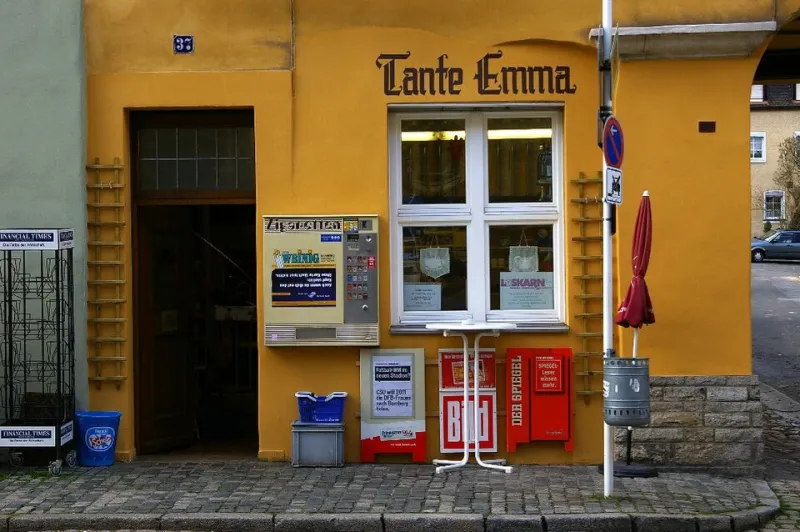
Photo: Reinhard Kirchner, CC BY-SA 3.0, via Wikimedia Commons
Every small business owner has daydreamed about it. The flagship is humming, regulars know your name, weekends are slammed — so why not do it again, two towns over?
Then reality bills you. Second locations fail at a sobering clip, and they rarely fail quietly. They bleed cash, poach your best manager, and pull your attention away from the store that pays everyone's rent — including yours.
Why the Second Location Is Harder Than the First
The first store had something the second one won't: your undivided attention. When you opened shop number one, you were there every day, fixing problems in real time, learning your customers by face. Location two gets a version of you that's stretched thin, visiting twice a week and managing by text message.
There's also a brutal math problem hiding in the numbers. Your first location probably survived its lean early years because your overhead was low and you worked for free. The second location starts with two payrolls' worth of habits — full staffing, market-rate rent — and no founder working sixty hours for nothing. Many owners discover their 'profitable' business was actually subsidized by their own unpaid labor, and the second location is where that truth shows up on the P&L.
The Duplicability Question
Before you shop for real estate, ask the uncomfortable question: is your business a system, or is it you?
Some businesses duplicate beautifully. A bagel shop with standardized recipes, a documented morning routine, and a manager who's already running the morning shift is a franchise-in-waiting. A bakery where the owner's palate is the quality control department, or a boutique where the owner's taste is the inventory strategy, is not — at least not yet.
Consider the cautionary tales that repeat across the country. The beloved neighborhood diner that opens a second spot and watches food consistency slip because the head cook stayed at store one. The independent bookstore whose second location stocked the owner's favorites instead of what that town's customers actually wanted. The taco joint that expanded across town only to learn its original success was anchored to a specific neighborhood's foot traffic — lunch crowds from a nearby hospital, in one real case — that simply didn't exist at the new site.
In each story, the product didn't fail. The system did. Or rather, there was no system, just one person doing everything well in one place.
The Readiness Checklist
Run your business through this before you tour a single commercial space:
- Documented operations. Can a competent stranger open, close, and run your business using written procedures alone? If everything lives in your head, you're not ready.
- A proven #2. You need someone who's already running your first location well — not someone you're hoping will grow into it. Promoting your best shift lead and hoping is how both locations end up leaderless.
- Twelve months of cushion. Not the cash to open the second location — the cash to lose money there for a year while keeping the first one healthy. Most second locations take longer to break even than the pro forma says.
- Demand data, not compliments. 'You should open one near me!' is not market research. Look at where your existing customers actually drive from, local competitor density, and whether the trade area matches the one that made you successful.
- A tested playbook. Have you ever been away from the business for two full weeks? If the first location wobbles without you, adding a second just doubles the wobble.
- Honest labor math. Rebuild your first location's P&L with your own salary included at market rate. That's the real profitability bar your second location has to clear.
Fund It Like It's a New Business
Too many owners fund expansion out of the first location's cash flow, which means one bad quarter at store two immediately threatens store one. Treat the expansion as its own project with its own capital — SBA loan, line of credit, dedicated reserves — and its own break-even timeline. If the plan only works when everything goes right, it isn't a plan.
And negotiate your lease like a beginner, because at the second site, you are one. A location that's a winner for a coffee chain isn't automatically a winner for you; your customer's habits live in the first store's zip code, not the second.
The Unsexy Truth
The most successful second locations usually come after the owner spends a year making the first one boring — repeatable routines, a manager with real authority, numbers reviewed weekly. Boring is what duplicable looks like.
If reading that checklist made you squirm, that's not a verdict on your business. It's a to-do list. The second location will still be there when your first one can run without you — and it'll go far better when it is.
Because the goal was never two stores. It was one business worth having twice.